Meet The Kinksters
Exploring Folsom Street East,
the Northeast’s largest
BDSM and Leather street fair
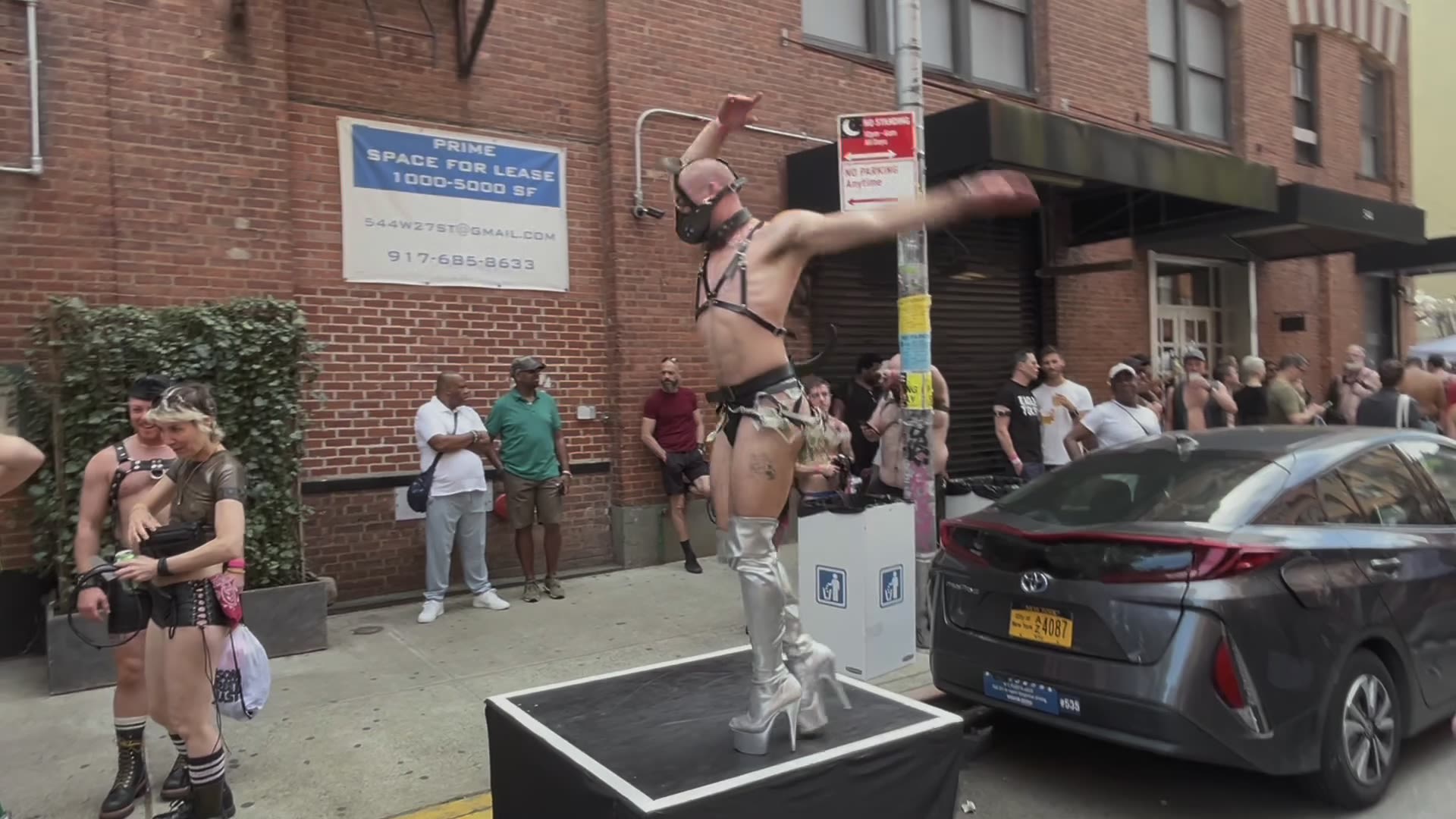

Folsom Street East, the Northeast’s version of San Francisco’s infamous BDSM and Leather street fair, took place on Sunday, June 16th, in Midtown Manhattan. Occupying the swath of 27th St. between 10th and 11th Avenues, it joined thousands of diverse participants in a seven-hour kinkfest. They stripped, danced, spanked, flogged and did other nasty things to each other on the sidewalks, while pedestrians strolling the High Line above stopped to stare. Did they see a community, a movement, an organized belief system? Or a gathering of freaks?
"Being kinky isn't like being anything else on the LGBTQAI+ spectrum. There's something about it that's still perceived as sordid, as shameful," said Murrey, an elderly person in a leather thong. He was leading a largely naked youth in a puppy mask around on a leash. "If anyone from my office saw me here, I'd probably lose my job. If my wife saw me here, she'd probably divorce me -- and if she did, I'd probably lose custody. Many of the people you'll meet here still have to live double lives." Over the past decade, Murrey added, watching the LGBTQIA+ rights movement normalize the lifestyles of other divergent identity groups, he and many in the kink community hoped they would be next. But despite being among the largest sexual minorities, they remain the most scandalized and the least understood. Why?
Kink And LGBTQIA+
“In the gay community, historian John D’Emilio notes, eroticism became the basis for an identity embraced by growing numbers of people. The same proved true for sadomasochists who increasingly embraced BDSM—however labeled at the time—as a sexual identity.… [T]he gay community served as a model for transforming erotic desire into social organization and personal identity.”.”

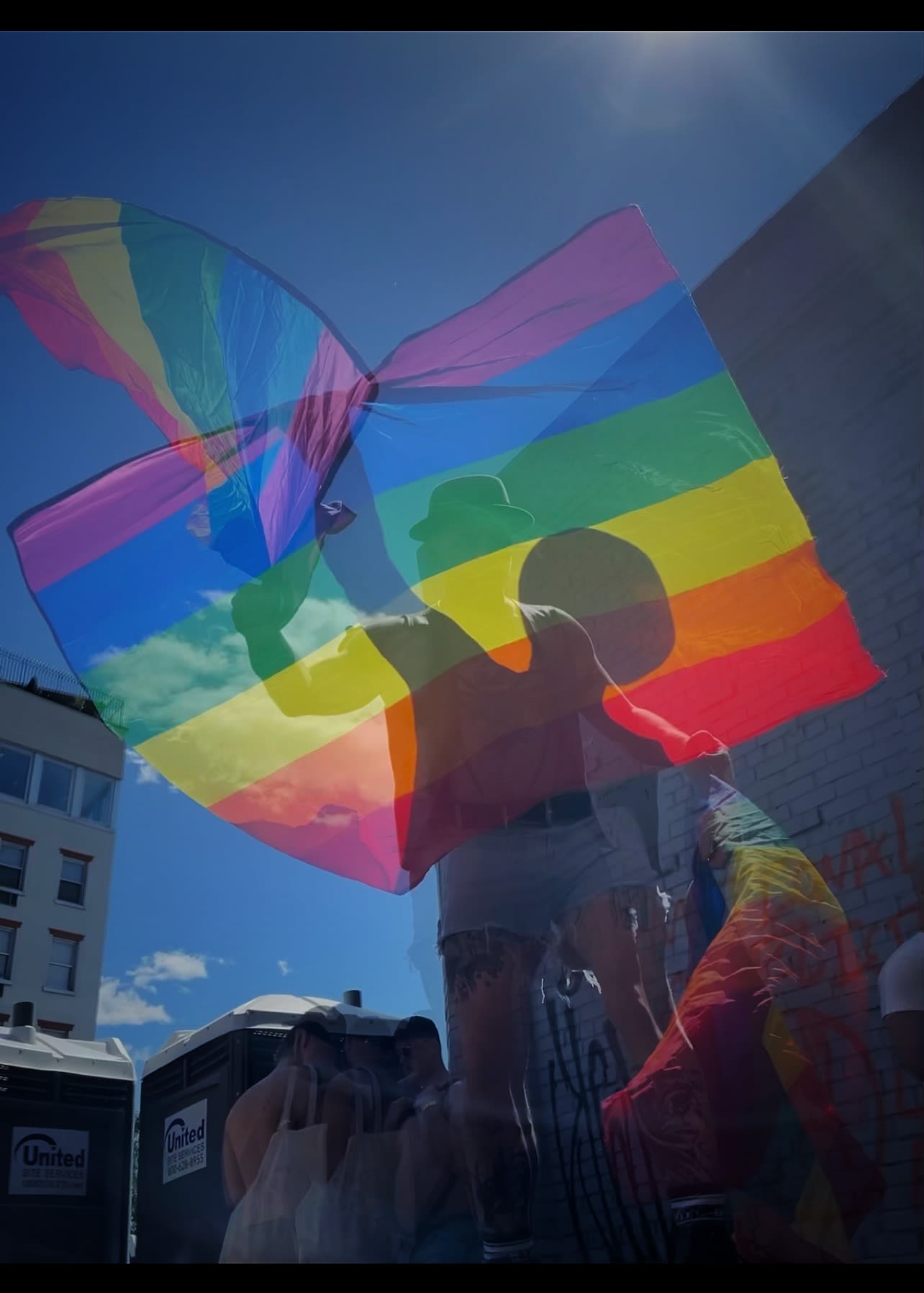
In 1984, during the height of the AIDS epidemic, an alliance of gay rights and housing activists launched Folsom Street Fair. What started as a fundraiser for San Francisco’s gay Leather bars has since been duplicated in cities throughout Europe and the U.S., becoming a flagship event for Leather, Kink, and LGBTQIA+ communities worldwide. Outside of Folsom, though, the terms “Kink,” “Leather,” and “LGBTQIA+” represent separate, and sometimes incompatible, groups. Their incompatibility is a key factor in the Kink community’s marginalization.
Over 19.4 million adult Americans — an estimated 7.6% of the country’s total population — identify on the LGBTQIA+ spectrum, according to a 2023 Gallup telephone survey: 57.3% of them as bisexual, 19.2% as gay/lesbian, 11.8% as transgender, and 4.1% as pansexual/asexual/queer/other. “Kinky” didn’t make that list. The LGBTQIA+ spectrum encompasses sexual orientations, gender identities, and intersex variations diverging from the normative heterosexual and cisgender norm, while “kink” is “a set of non-normative sexual desires, fantasies, behaviors and practices” that is “not defined by any specific sexual act or behavior” (Connolly et al, Journal of Sex, 2019). This seemingly academic distinction effectively severs the kink community from the LGBTQIA+ spectrum. Though they sometimes overlap through individuals’ specific sexual orientations, kinky people by definition remain a distinct populace unto themselves.
Going by many names, the kink/BDSM/fetish/Leather/sex-positive/alt-sex communities number at least 4.5 million in the U.S. According to recent statistics culled from FetLife, the kink communities’ primary social network, 48.7% of their members identify as straight. The remaining 2,308,500 non-heterosexual identities — constituting that important overlap between the kink and LGBTQIA+ communities — include bisexual (20.3%), pansexual (5.7%), fluid (3.7%), gay (2.0%), queer (1.5%), lesbian (1.1%) and asexual (0.3%).
Being obviously non-normative — and, as such, vulnerable to discrimination — kinksters of all sexual orientations look to the LGBTQIA+ community for protection and representation. But both the hetero and non-heterosexual kinksters attending Folsom Street East described the connection between the two communities as “discordant.”

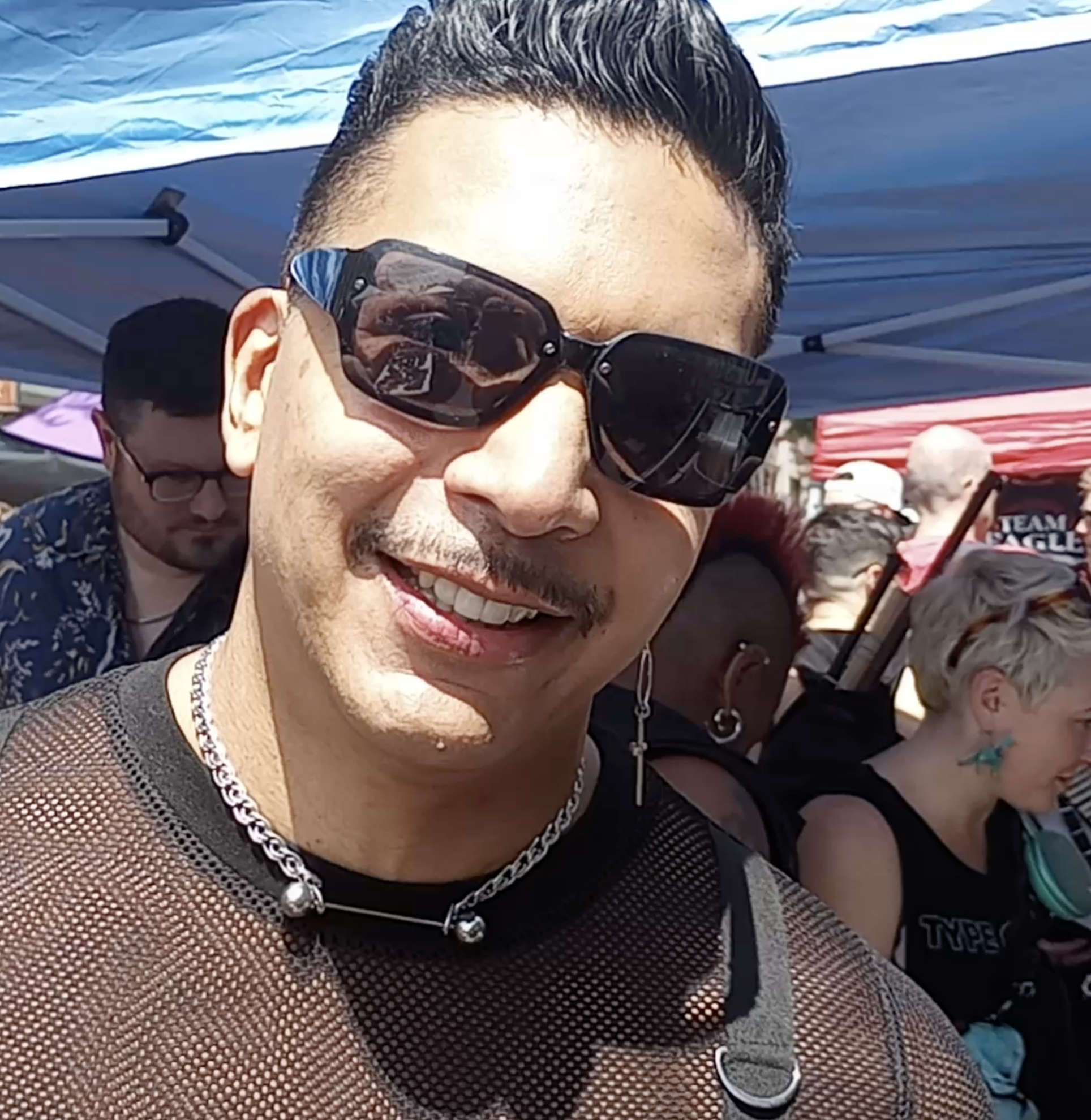
Steve V. Rodriguez, host of the progressive TAGS (Talk About Gay Sex) PODCAST "There’s a broad gap between the LGBTQ and kink communities"
Steve V. Rodriguez, host of the progressive TAGS (Talk About Gay Sex) PODCAST "There’s a broad gap between the LGBTQ and kink communities"
“There’s a broad gap [between the LGBTQIA and Kink communities] that sadly doesn’t show many signs of uniting anytime soon,” said Steve V. Rodriguez, host of the progressive TAGS (Talk About Gay Sex) podcast, in an email interview following the event. “Many in the LGBTQ community still see the Kink/Leather/BDSM community as ‘the other,’ whose only component is being overly sexual.”

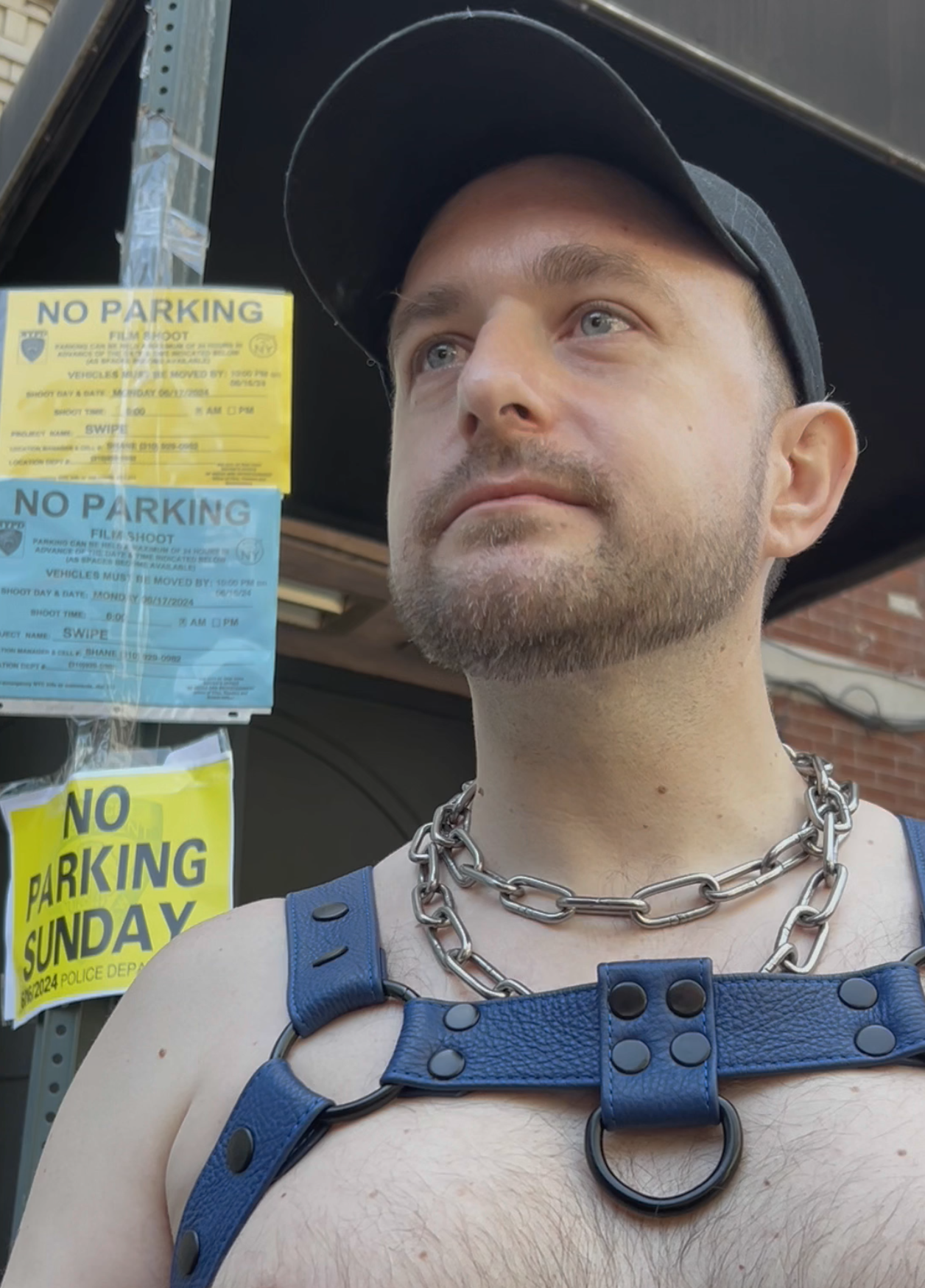
Jason Fluegge, Captain of ‘Team Eagle NYC’. “That's where you see that discord of “No kink at Pride” that comes up every year."
Jason Fluegge, Captain of ‘Team Eagle NYC’. “That's where you see that discord of “No kink at Pride” that comes up every year."
“That’s where you see that discord of ‘No Kink at Pride’ that comes up every year,” noted Jason Fluegge. Fluegge, a gay man in his 30s, was manning the booth of Cycle for the Cause, a biking group that has been raising funds for local LGBT Centers since the ’90s. He’s captain of Team Eagle NYC, representing New York’s most veteran Leather bar. Active in both the gay and Leather communities, Fluegge often experiences tension between them in the form of awkward social interactions. “I think some of that has to do with leather and kink, even nowadays, there’s still a part of that where it’s like behind the wall, behind-the-scenes type of experiences.”

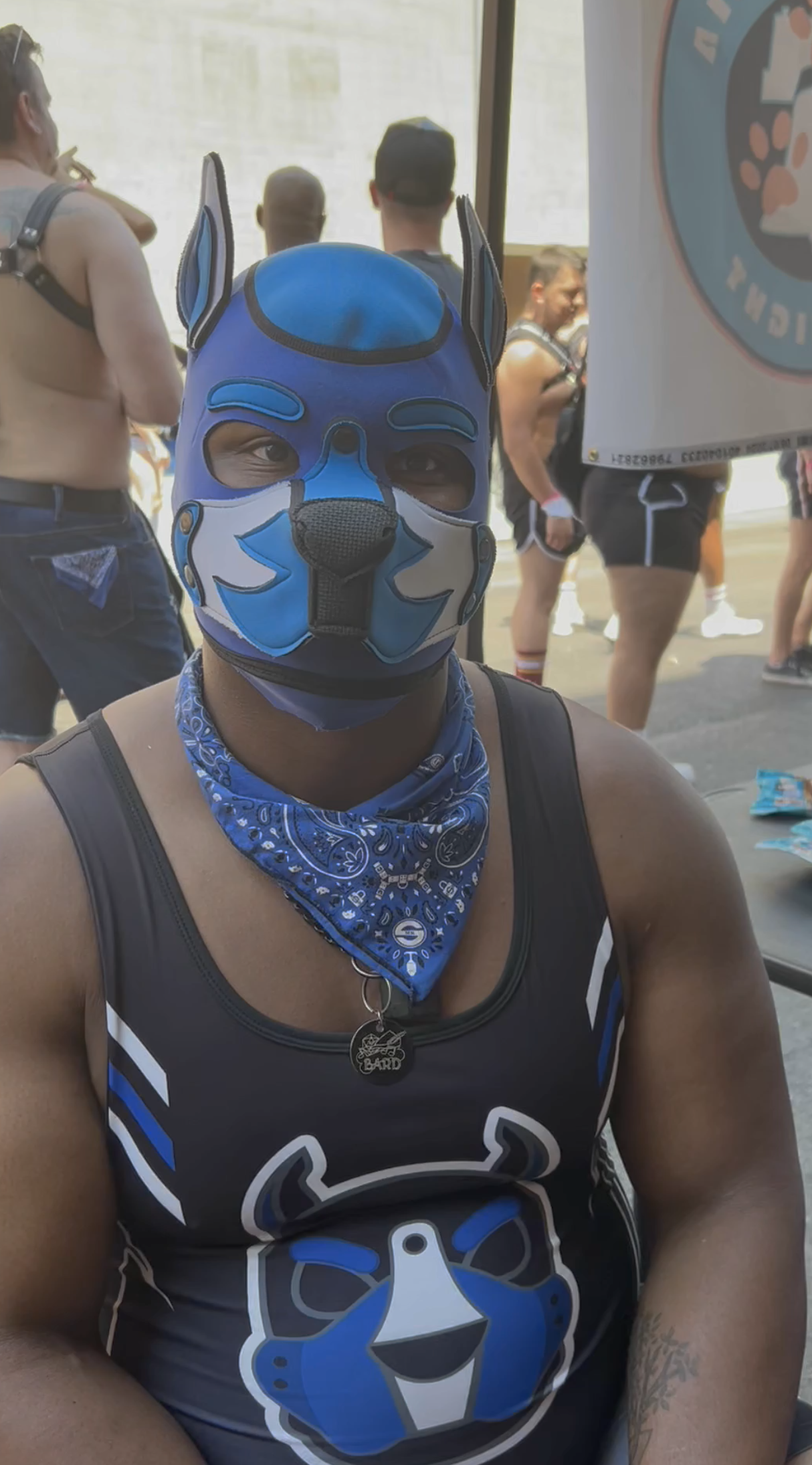
Pup Bard, a volunteer at the Philly Pet Night booth. "A lot of younger queer people who don't get to learn the important history of how kink has been at the forefront of fighting for queer liberation and rights".
Pup Bard, a volunteer at the Philly Pet Night booth. "A lot of younger queer people who don't get to learn the important history of how kink has been at the forefront of fighting for queer liberation and rights".
Pup Bard, a young gay man in his 20s manning the Philly Pet Night booth, feels the gap between the gay and Kink communities stems from ignorance. “We’re always fighting a backwards-sliding battle,” he noted. “You have a lot of discourse from people who want to be on the normative side of things, who feel that kink shouldn’t be part of the broader LGBTQ expression. Because there’s a lot of younger queer people who don’t get to learn the important history of how kink has been at the forefront of fighting for queer liberation and rights… it’s a shame that some people just kind of forget that part, and just want to push us aside and like commercialize it, commercialize queerness.”
Daddy Sage is president of the New York Northeast chapter of ONYX, a “Leather Fraternity for Gay and Bisexual Men of Color.”(onyxnynortheast.org) In the early ’80s, he was instrumental in addressing the HIV/AIDS crisis in his community—which, for its duration, largely united nonhetero factions. Sage attributed the tension between the Kink and LGBTQIA+ communities to both personal tastes and current “identity politics.” “When we first started this stuff in the ’70s, I was in organizations that just had the word ‘gay’ in them. Then it became ‘gay men’, ‘gay men and women,’ ‘gay men and lesbians,’ “gay, lesbians, and bisexuals,’ then ‘transgender’ was added to the mix…but we are all one community,” he said in a pre-event Zoom interview. Sage counted the Kink community’s inherent salaciousness as another source of contention: “There are folks…[who] see us all as one melting pot, but there are other people who think that we are flaunting our sexuality too much. People don’t always want things put in their face. Kink and Leather are about putting stuff in folks' faces, and they resent that.”
“One melting pot” and “our broader community” were how most nonheterosexual kinksters related to the LGBTQIA+ community. To them, the disconnect between their identity groups was a matter of siloing and factional in-fighting. For heterosexual kinksters, who are not rooted in the LGBTQIA+ community through their sexual orientations or gender identities, the connection is questionable to begin with.
“I kind of snark around it by saying I live in the ‘Q’ [Queer] and play in the ‘plus,’” said Evie Amore, a global marketing strategist and divorced mother of two. “The ‘Plus’ is where the Kink falls, as well as the polyamory, the gender fluidity… anything that doesn’t hit one of those first letters.”

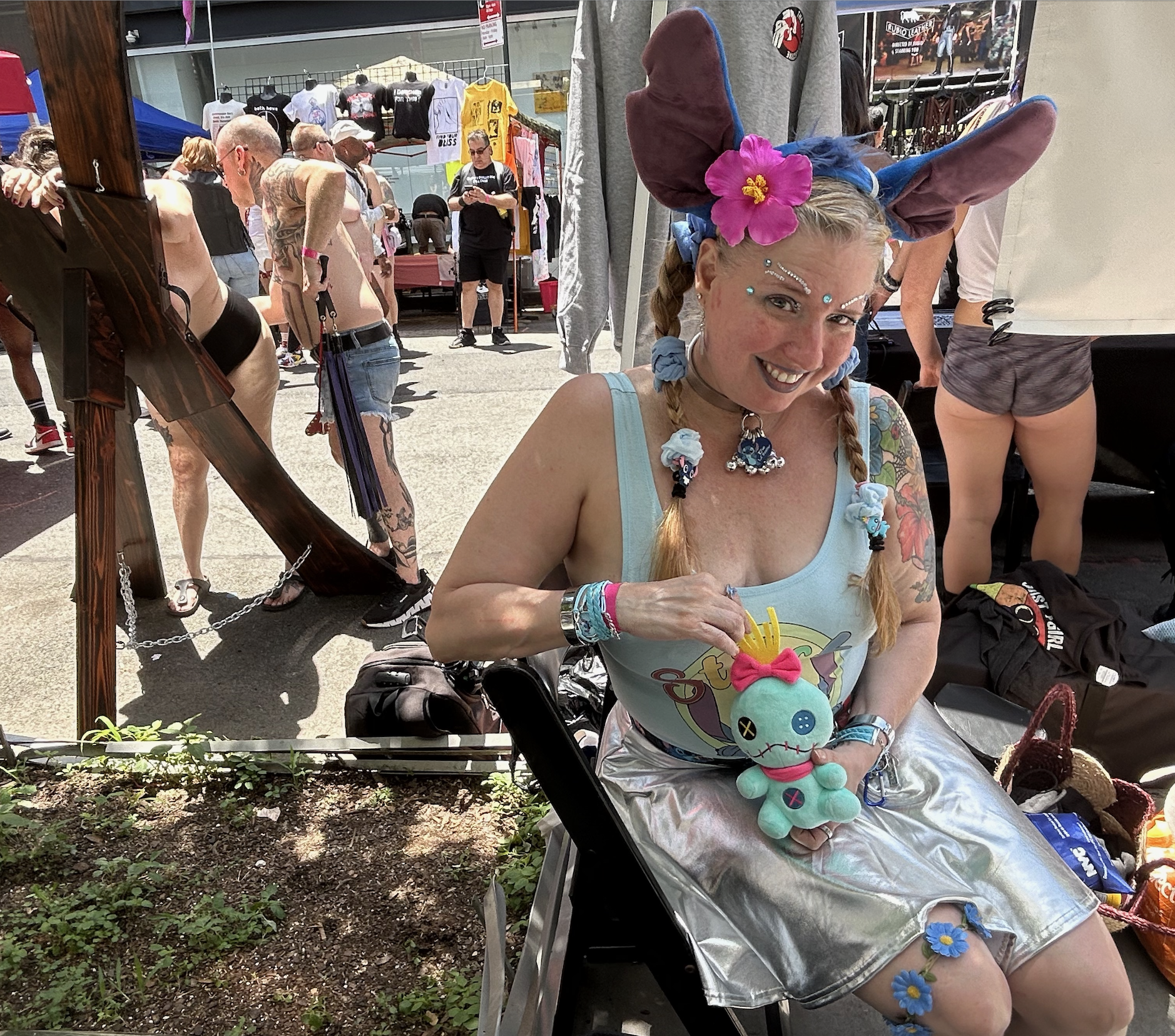
Evie Amore. “I live in the ‘Q’ and play in the +”
Evie Amore. “I live in the ‘Q’ and play in the +”
“I am not sure there IS a relationship between the Kink community and communities that are based on sexual orientation or gender identity issues,” said Cat Orme, an educator and community organizer active in New York’s kink scene. “It is my experience that kink isn’t recognized under the LGBTQIA+ umbrella… the kink community isn’t recognized almost anywhere.”
In some cases, the lack of recognition translates into covert discrimination. “An organization I was working with was hosting a kink event. When some of their gay donors heard about it, they withdrew their donations, because they didn’t want to be affiliated with kink,” recalled Joshua Rodriguez, a kink educator and event producer. Rodriguez attributed the occurrence, which he described as common, to the “shame and stigma” still surrounding the practice of BDSM: “acts that are still seen as unnatural or immoral,” just as homosexuality itself was once perceived..
Kink and Leather
“Leather” is an aesthetic,
a historical movement,
a sexual culture,
and an organized value system.

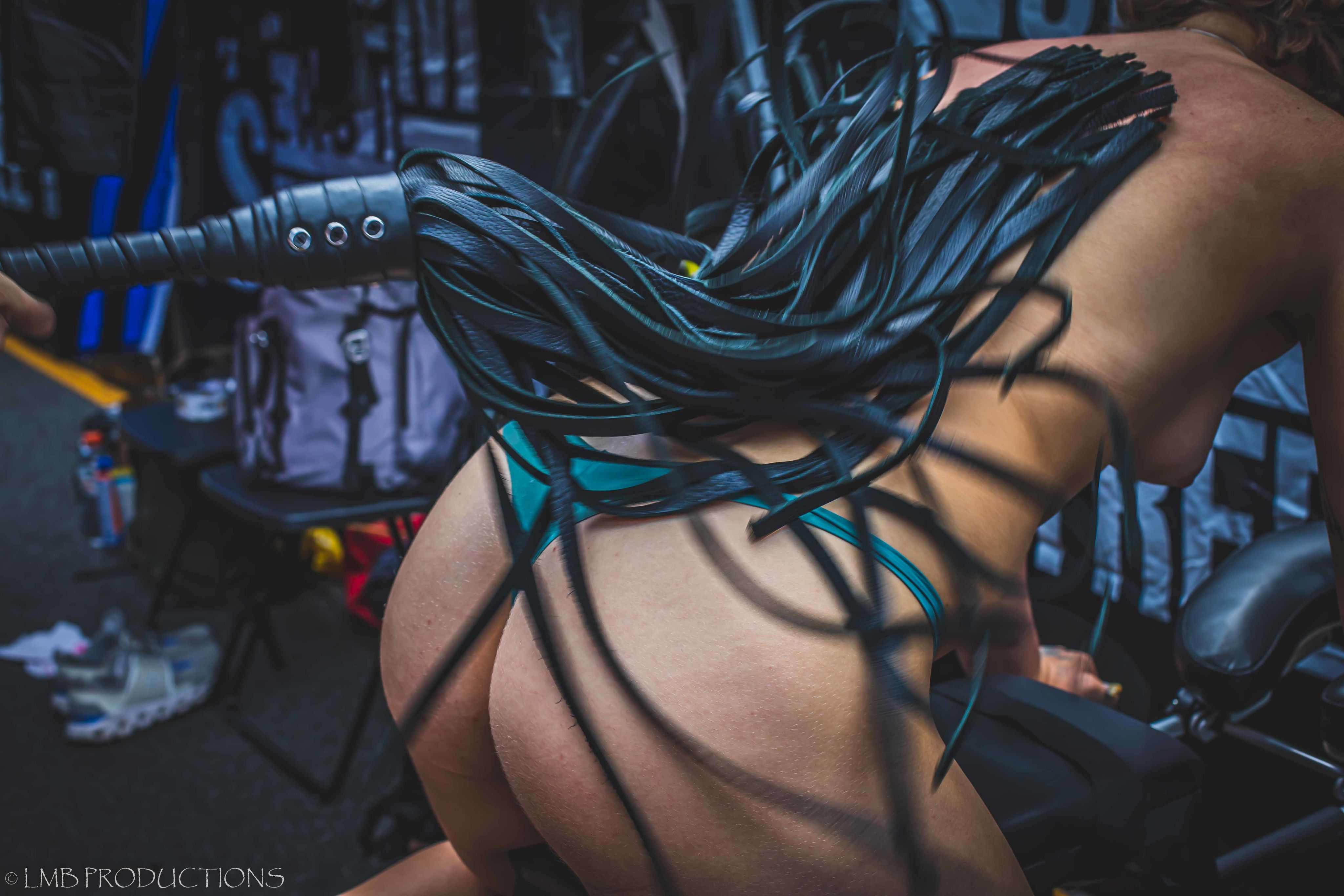
The practice of BDSM (bondage, discipline, dominance and submission, sadomasochism, and related dynamics) is one of the kink community's defining traits. Of all the cultures associated with it, the leather subculture is probably the most famous — so well-known that "leather community" and "kink community" are sometimes used interchangeably. But they are not the same, and the confusion between them is another factor complicating the kink community's path to normalization.
Leather began as a strictly gay secret order in the '40s, when all nonhetero expressions were punishable by imprisonment. It emerged as an ultramasculine counter to the effeminate gay stereotypes of the time, shaped by gay members of biker gangs and WWII veterans into a framework combining elements from both worlds. Over the next decades, as Stephen K. Stein describes in Sadomasochism and the BDSM Community in the United States, the subculture fed into mainstream culture through film, art, and fashion, spreading from Los Angeles to San Francisco, New York, and Chicago. Dovetailing with the movement for gay and lesbian rights, leather bars proliferated, seeding communities, organizations, and social reform.
But BDSM was never leather's focal point. Sadomasochism had existed independently for centuries, though without socially recognized parameters for consent it was viewed as a dangerous mental disease. Those parameters were defined in the '70s by the first S/M organizations — TES in New York, the Chicago Hellfire Club, San Francisco's Society of Janus — groups that initially avoided any public reference to their practices, sheltering instead under the cover of "leather factions."
The AIDS epidemic in the '80s split the two communities. Nearly eradicated by the disease and blamed for it, the leather community withdrew from public view. The BDSM community flourished, forging its own culture around the principle of "safe, sane, and consensual."
In 1984, activists launched Folsom Street Fair to protect gay leather bars in San Francisco's SOMA district. Today it's the world's largest leather and BDSM event, with offshoots worldwide — each pitching a tent so big that this year, "leather community" was entirely omitted from Folsom Street East's description. Instead, the event billed itself as a celebration of the "Fetish, Kink, and LGBTQIA+ communities."
Pup Kenzo, one of Folsom East's 2024 board members, explained the description aimed "to promote inclusivity." "Everyone knows Folsom is a leather event," he said with a shrug. "The board wanted to show that it's for everyone else too." But for leather devotees, the automatic inclusion of "everyone else" in a flagship leather event signals a fatal dilution of the culture.
NYC's Folsom Street East was launched in the mid-nineties by GMSMA (Gay Male S/M Activists), once "the most influential organization for gay male S/M practitioners in the Metro-New York City area" (leatherhalloffame.com). Peter B., a past president, said that "Looking at it now, I can assure you this isn't what we had in mind."
"I belong to what you would call the leather old guard," he explained. "That means that within the context of kink, I conduct myself according to established rules, traditions, and core principles of leather culture. I expect the same from those I interact with. But from all the people out here today, few even know these core principles exist. So what are we doing here? If we are no longer Leather, then who are we?"
The Kink
Communities
Today

Leather and BDSM venues and gatherings—Leather bars such as The Eagle, title competitions like IML (International Mr. Leather) or BDSM conventions such as TesFest, Domcon and others—still serve as the backbone of the kink communities today. But those communities are diversifying fast, branching into ever more specific subgroups. The pup community, for example, "started out with a specific type of sexual humiliation play within gay Leather culture," explained Pup Bard. It evolved into its own subculture with its own dress codes, customs, and hierarchies, and is now counted among kink's fastest-growing factions. Its ascent fueled the broader petplay and furries communities, which borrowed from cosplay to weave anthropomorphic elements into sexual identity. A similar process formed the littles community around age play, which spawned the ABDL (Adult Baby Diaper Lovers) community, and so on. The pattern repeats: diversification as both engine and fracture line.
"There are people who say this is evolution," said Daddy Sage. "On the other hand, we can't always come together because of that."
Madam Smitten, owner of the Chelsea-based dungeon Smitten's Lair, put it practically: "Every group kind of does their own thing, and that's fine, but the communication between the groups isn't always there. It'd be nice if we could all just adopt some simple, basic rules — nothing fancy, but have like, you know, a Leatherman's Handbook version for kink overall."

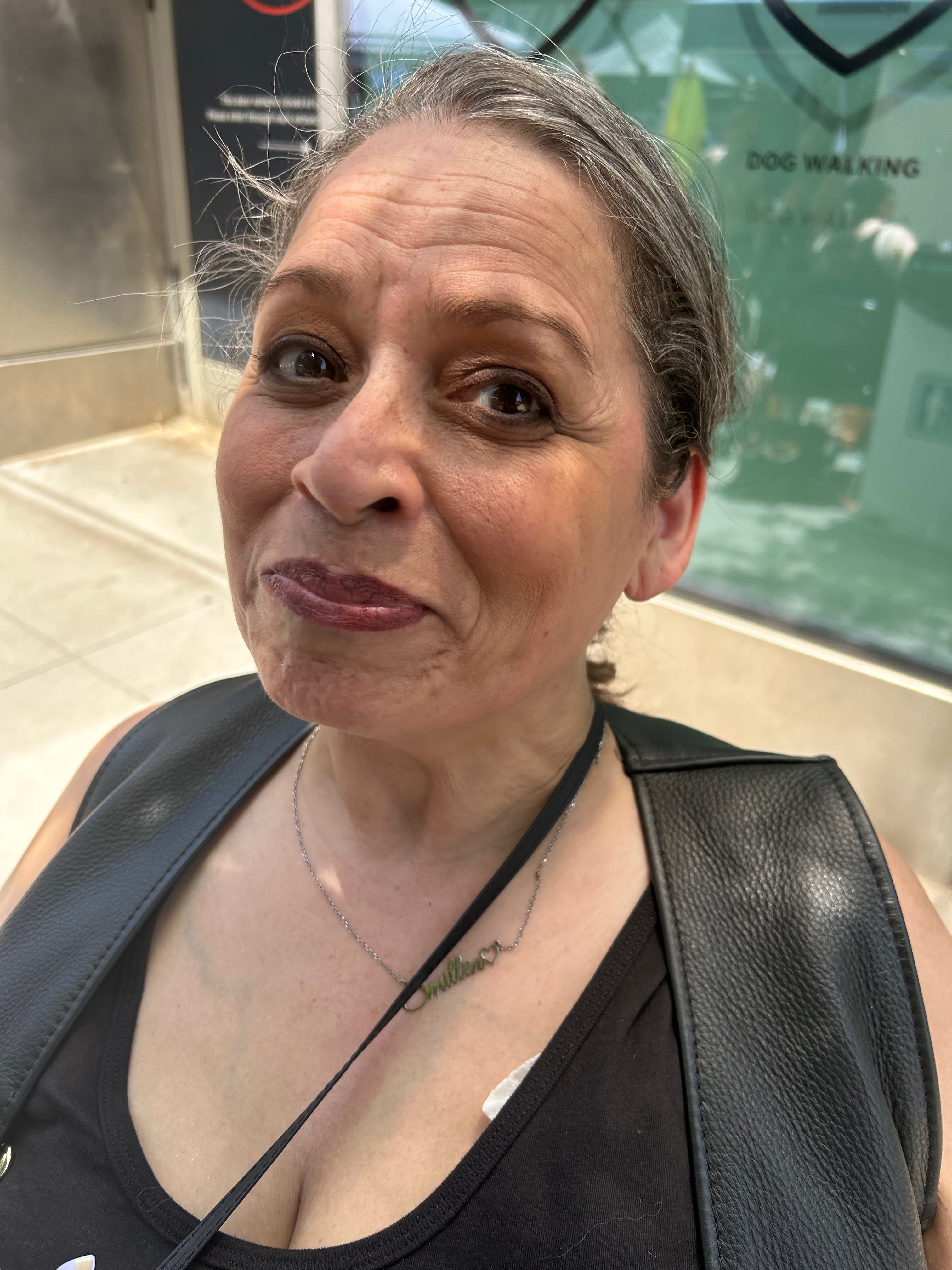
Madam Smitten, owner of the Chelsea-based Dungeon and BDSM playspace “Smitten’s Lair”,
Madam Smitten, owner of the Chelsea-based Dungeon and BDSM playspace “Smitten’s Lair”,
Fifteen of the sixteen people I interviewed at Folsom Street East agreed that kink has a public image problem — a lack of coordination, education, and resources that amounts to unclear messaging.
"'This is who we are, this is what we stand for, and this is what we want': That's what any community needs to be able to say in order to represent itself in the world," said Rodriguez. "Our community hasn't been able to formulate that for itself yet, not in broad enough terms that we can all agree on. Because of that, people still think we are just about weird sex."
The sociologist David Evans called this gap "sexual citizenship" — a sexual minority's capacity to bridge the private and public spheres. "No matter how private the sexual acts," Evans argued in Sexual Citizenship: The Material Construction of Sexualities (1993), "finding sexual partners is necessarily a public act, one that requires a level of public acceptance. It requires free sexual expression, the ability to publicly state one's desires and seek those who share them."
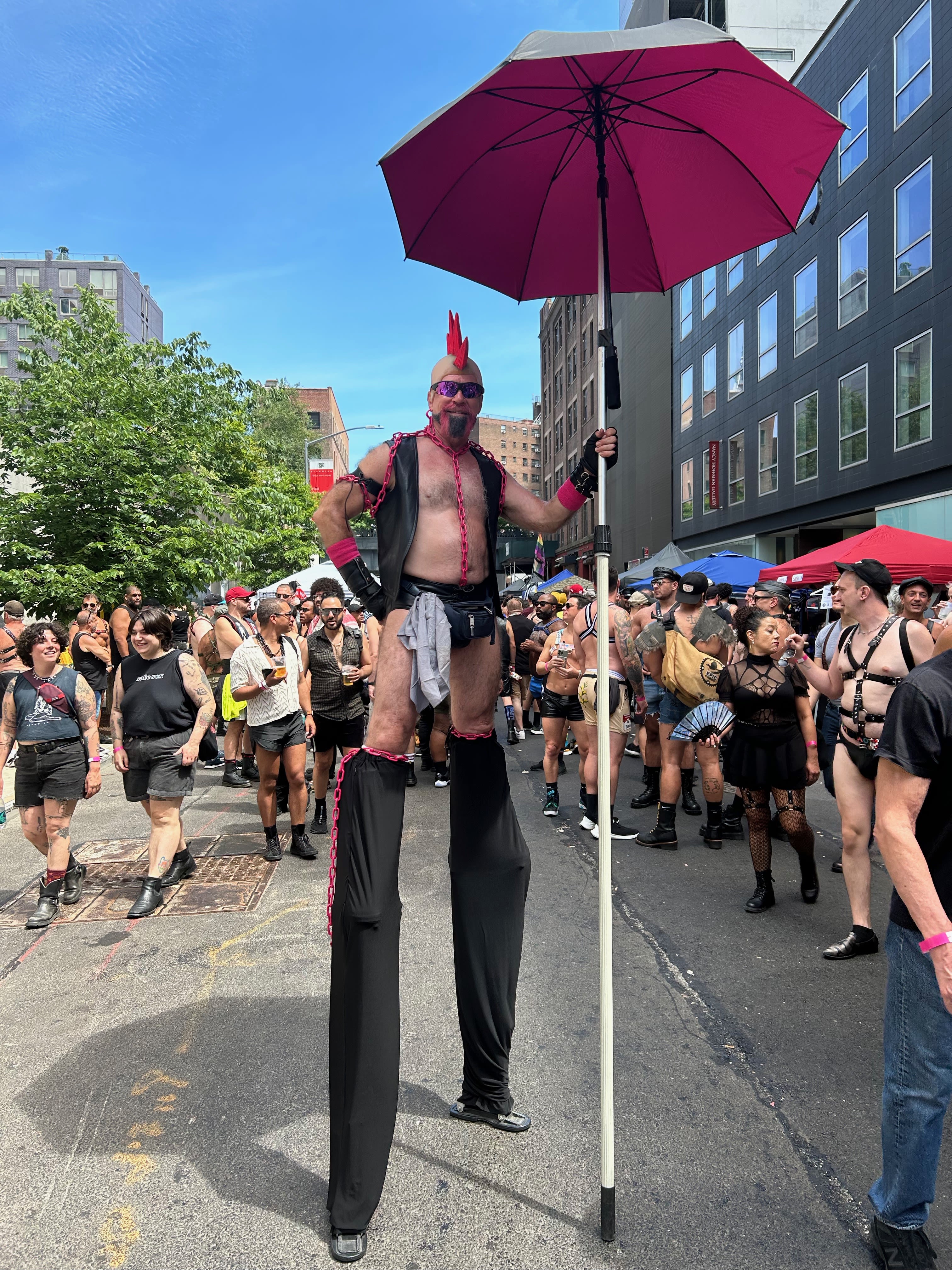
Dale Vargas. "It practically happened already."
Dale Vargas. "It practically happened already."
Carrying a giant pink parasol, Dale Varga, a Leatherman in his 60s in a pink mohawk wig, patrolled Folsom Street East on stilts. He’s been greeting event-goers from this high perch for the past 15 years or so, simply because “I love the people who come here.” Dale was the one interviewee with no concerns about the community's public image problems: when I asked about them, he laughed. “I lived to see ‘gay’ go from shame to pride, ‘queer’ go from an insult to a sexual orientation, and ‘fluid’ become a gender,” he said. “After all that, for kink to go from ‘kinda weird’ to ‘kinda normal’ is such a small step... that it practically already happened.”
“No matter how private the sexual acts, finding sexual partners is necessarily a public act, one that requires a level of public acceptance. It requires free sexual expression, the ability to publicly state one’s desires and seek those who share them.”
 Built with Shorthand