
Death
Defying
Tags
The Rise of
Rappelling Graffiti
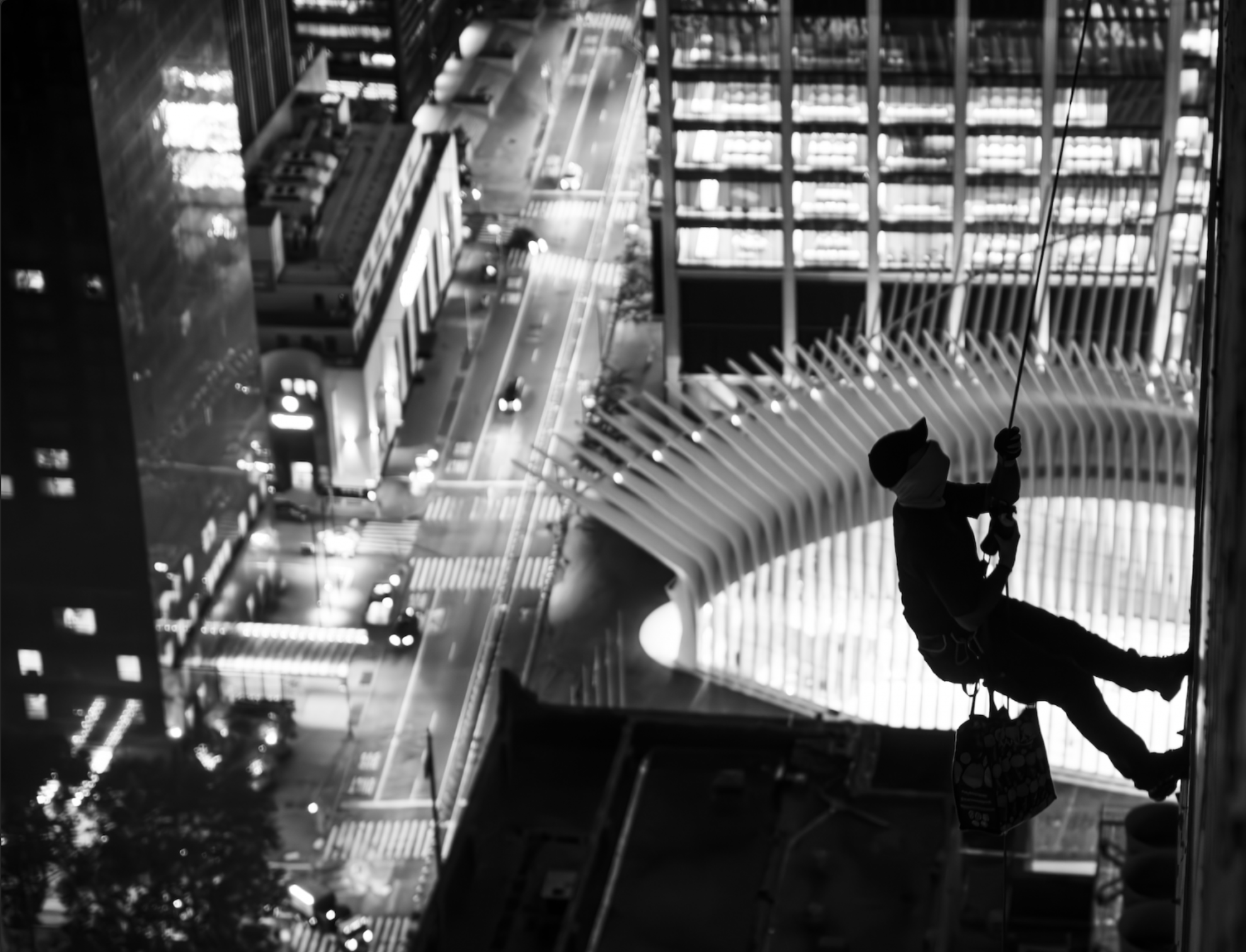


Six hundred feet above Manhattan's streets, legendary tagger RAMS-MSK descended the concrete face of 45 Park Place, an abandoned skyscraper. He left three tags, in three different styles, across the 41-42 floors. This September 2024 mission, documented by photographer Isaac Wright, represents a new frontier in graffiti, in which street art meets extreme sports: rappelling down buildings to tag previously untouchable surfaces.
"Rappelling opens up a whole new category of spots, and it's a really effective way to stand out from anything else in a city,” RAMS told Montana Cans.

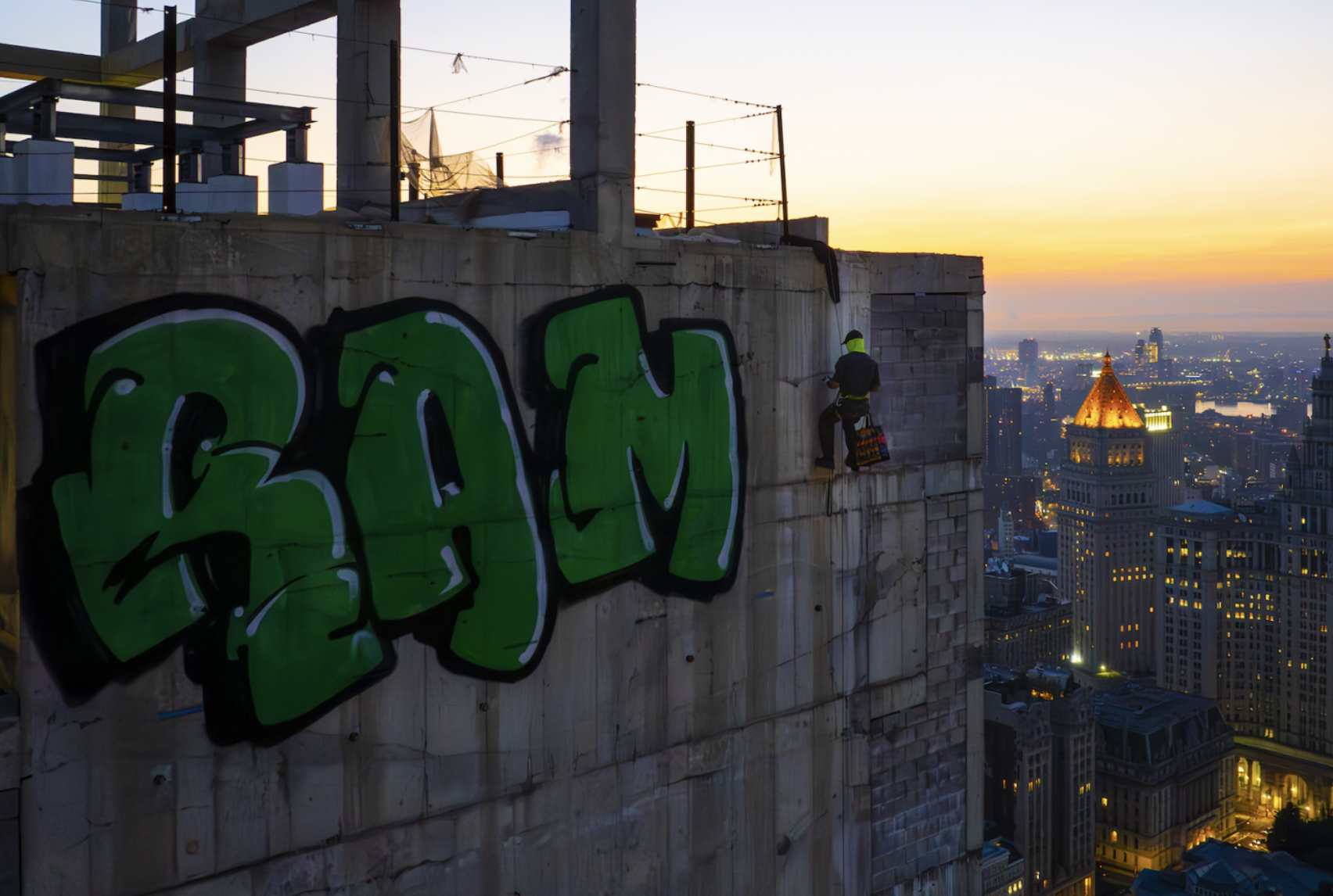
RAMS tagging 45 Park Place. Photo by: Isaac Wright
RAMS tagging 45 Park Place. Photo by: Isaac Wright
Scaling New Heights
Rappelling, also known as abseiling, is a controlled descent technique most frequently used in mountain climbing. The rappeller attaches themselves to an anchor point at the top using a rope, then uses a belay to create controllable friction, regulating their descent. It's unclear exactly when and how this particular scaling technique began trending with taggers. A 2025 New Yorker article, following taggers XSM and QSAR on an NYC mission ("How to Tag a Skyscraper, Six Hundred Feet Up," January 27, 2025) suggests that rappelling was co-opted by taggers after the 2021 Tokyo summer Olympics, in which rock climbing became an Olympic sport. The post-Covid prevalence of abandoned skyscrapers provided both opportunity and motivation: beyond simple visibility, rappel tagging has the risk-reward ratio of a heist, with each successful tag representing a complex logistical achievement. Roger Gastman, a graffiti curator and expert who has documented the culture for decades, explained that the appeal is in the challenge: "You're gonna have to walk up a lot of steps that probably aren't very well lit, carrying your supplies. And there's nowhere to run when you're up there. It's not like you're painting in an alley that has an exit both ways. Getting into the building is one thing. Getting up the building is one thing. Doing the job is another thing. Then getting out is a whole other thing. You're very, very exposed when you do these types of things."
That, and the adrenaline: "It straight up fucking felt like I was trying to kill myself… you're going over this edge and as soon as your central gravity goes off, it's like, yeah, you feel like you're gonna die," RAMS told fellow tagged XSM, in a rare on-camera conversation.
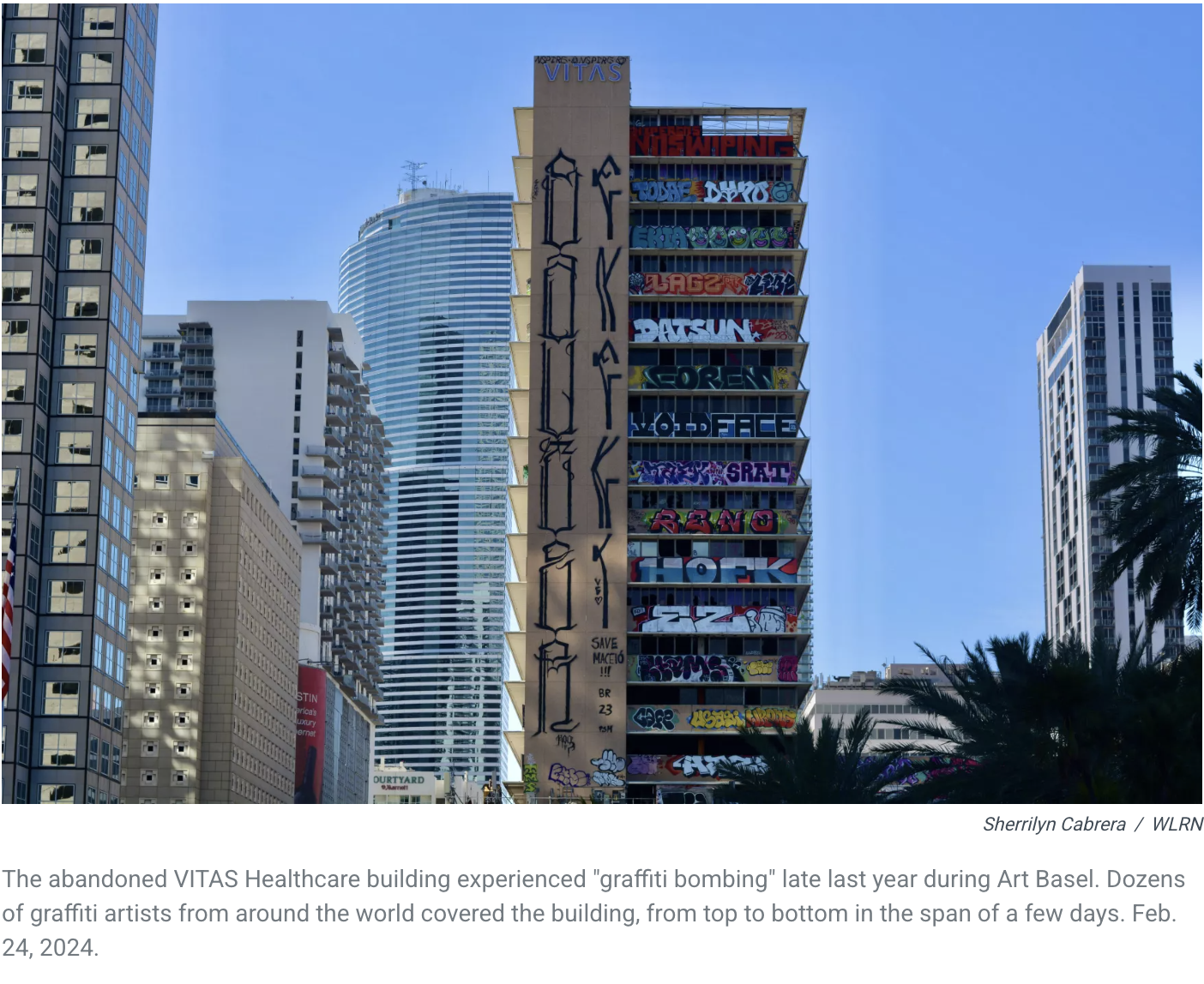
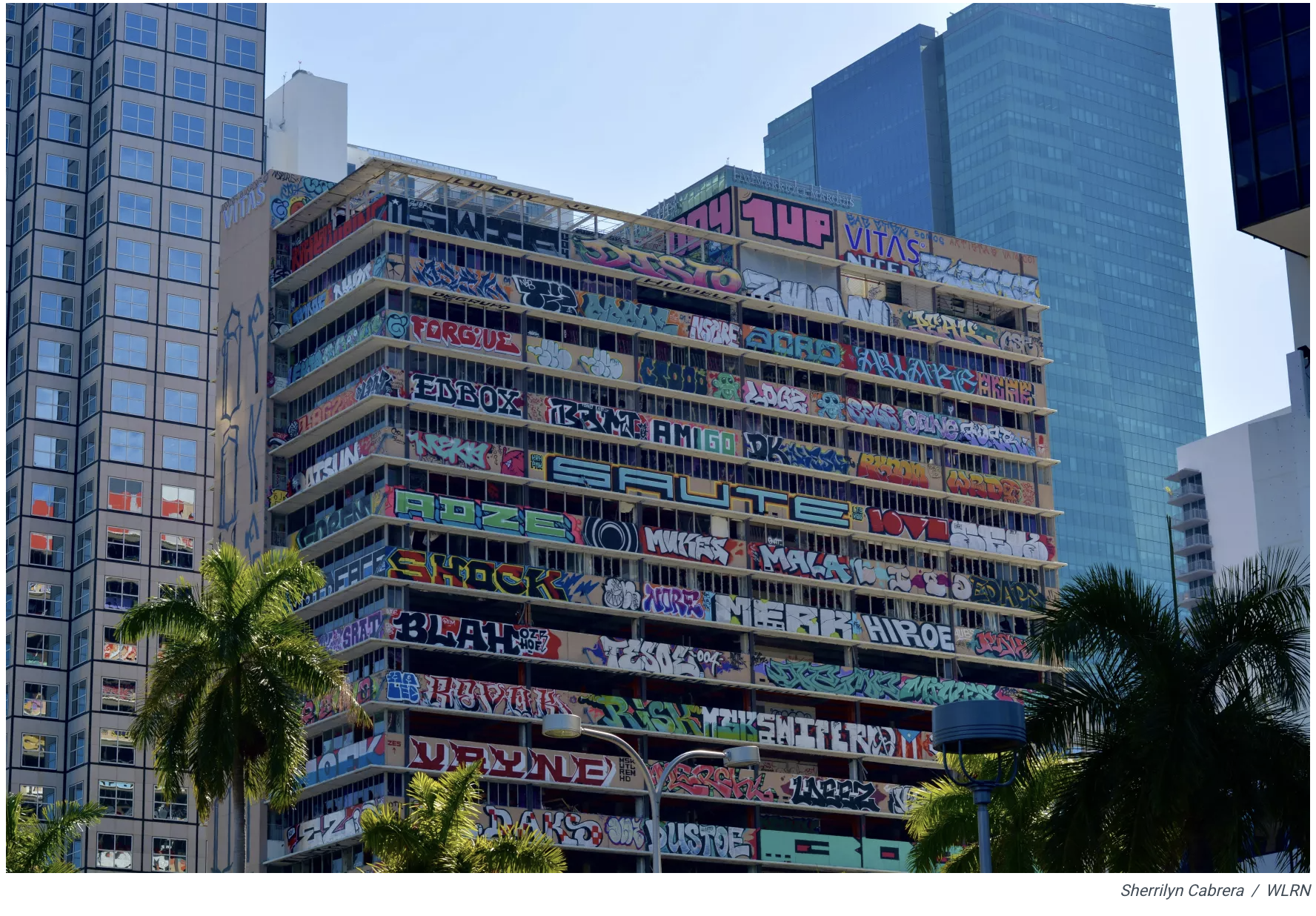
Rappelle graffiti made its most visible debut during Miami's 2023 Art Basel, with hundreds of high-caliber, international artists rappelling down the abandoned VITAS Healthcare high-rise to tag it top to bottom. The following winter, taggers swarmed Los Angeles's Oceanwide Plaza, covering 27 floors of the abandoned luxury complex so thoroughly that CNN dubbed it "The Graffiti Towers".


The Players
RAMS, a New Zealand native and member of the legendary MSK crew, has become the public face of rappelling graffiti. With 121,000+ Instagram followers, he documents his death-defying missions across continents. "I did it for the first time in America. My buddy NOTICE had already done it a few times before. We went out the night before I left Philadelphia. I didn't even know what the equipment was – He showed me on the roof," RAMS told Montana Cans Magazine in 2024.
XSM (Extra Small, referring to his tiny stature) a Massachusetts-based artist, represents the East Coast scene. "I got into graffiti during high school because all my friends were doing it. Kids at school knew that I could draw, so one day a buddy of mine handed me a mop and told me to tag some stuff," he told Bodega NYC.

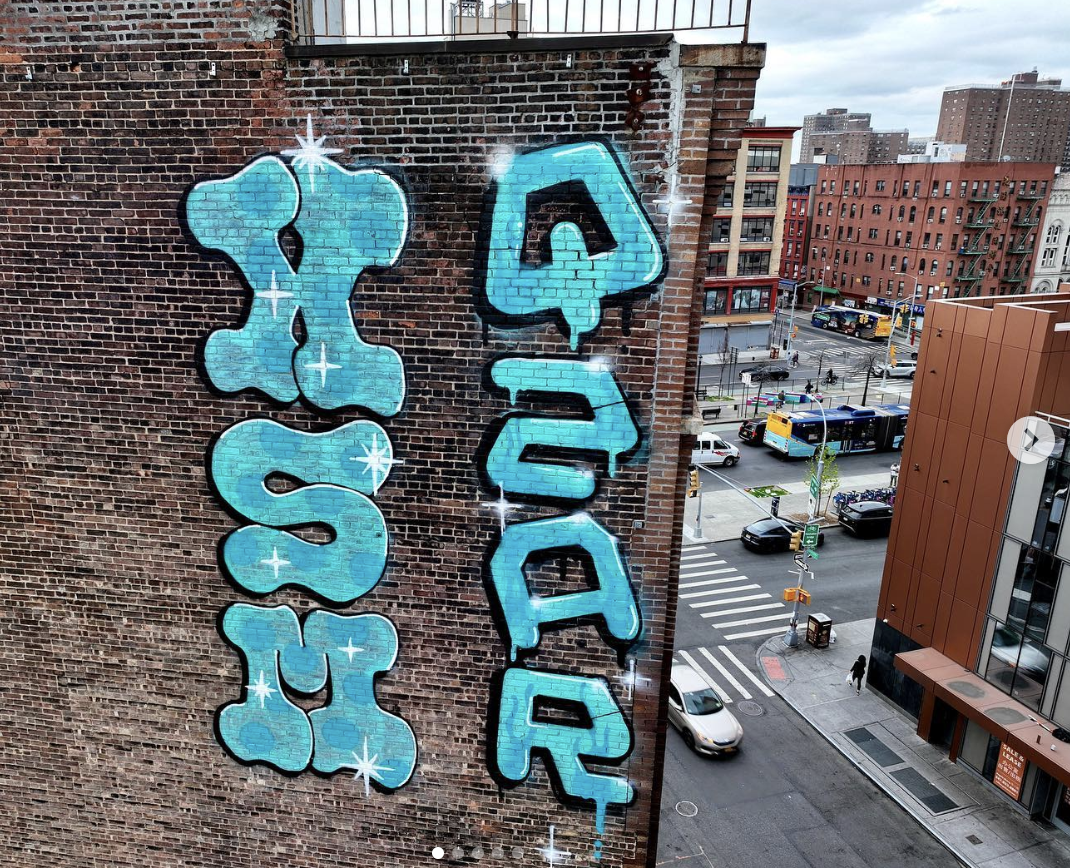
Photo by: aloftgraffitinyc (IG)
Photo by: aloftgraffitinyc (IG)
Taggers like Qzar, Son, Flash, Dink, Ecal, Abys, Zerz, Xer, Optimo NYC, Homesick, Keans, Notice, Bella and Angr demonstrate the breadth of writers operating in this scene, though their high-altitude exploits represent just one facet of their broader artistic practice.

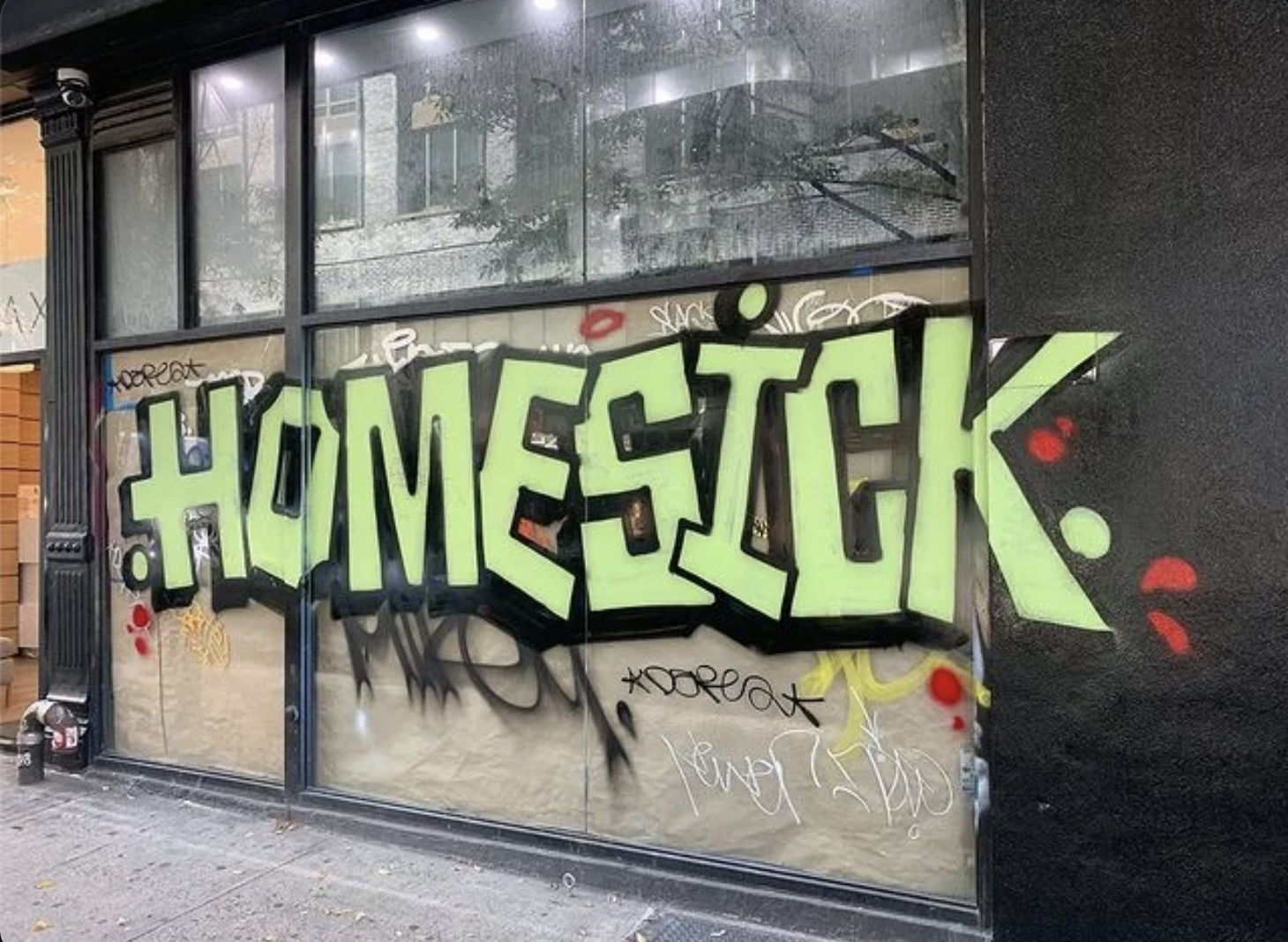
Photo via R/graffiti
Photo via R/graffiti
Along with the taggers themselves, the community includes the photographers and videographers who document them. Like Isaac "Driftershoots" Wright, whose documentation of RAMS' 45 Park Place piece brought mainstream attention to the movement. Wright, a U.S. Army veteran with 203,000 Instagram followers, was arrested at his own gallery opening for documenting Empire State Building climbs, illustrating the legal risks surrounding the scene.
Global Connections

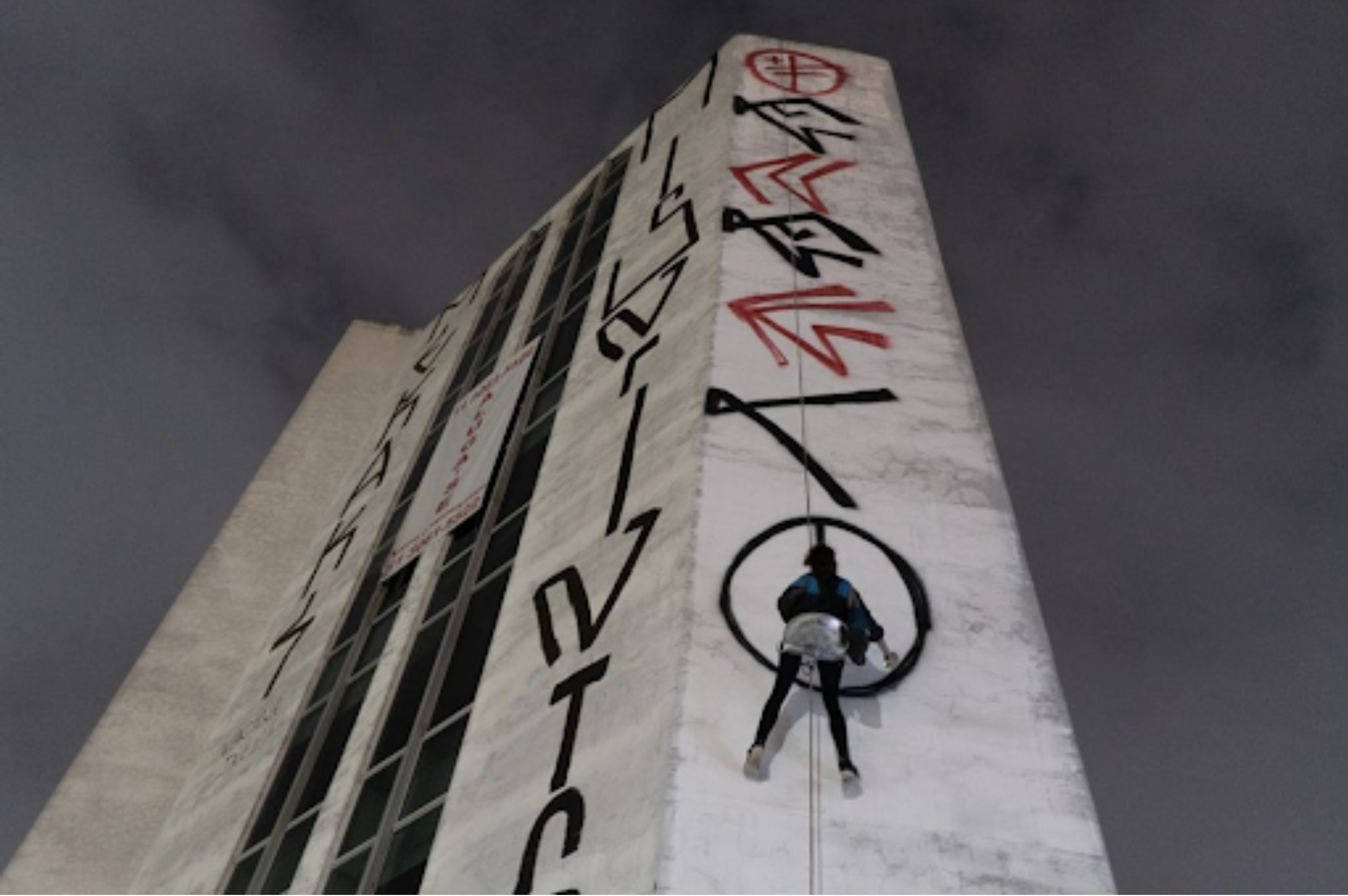
Image vie theravereport.com
Image vie theravereport.com
The rappeling technique's roots trace to Brazil's pixação scene, where artists have climbed buildings since the 1980s. Eneri, one of São Paulo's most prominent pixadoras, explained the evolution to The Rave Report in 2024: "São Paulo has so many people doing Pixo, that they started to need to find higher and harder places to be part of the agendas (a wall or building with many Pixos made) and then climbing to paint became also something cultural."
Brazilian artists use makeshift equipment and free-climbing techniques. "For us, it's important to say that climbing is different than rappelling. Climbing it's only you, your partners and the building, going by the outside of the building to get the spot. And rappelling, you get a rope to go down with the equipments, by inside of the building," Eneri clarified.
Still, the connection between Brazilian pixação and American rappelling graffiti remains debated. "I don't think there's a connection," RAMS told XSM. "I think it's more of just... people have emulated the style." However, both artists acknowledged seeing Brazilian climbing videos online as early influences, even if the technical approaches differ significantly.
Law Enforcement's Response
With traditional enforcement methods designed for street-level vandalism, rappelling graffiti has law enforcement in a bind. "Cops can't chase taggers up a building," noted Timothy Kephart, CEO of the national web-based tracking system GraffitiTracker, "a comprehensive, web-based system designed to help identify, track, prosecute and seek restitution from graffiti vandals" (graffititracker.net). The GraffitiTracker database system analyzes photos before cleanup, building connections between incidents, documentation on the artists' social media accounts, and the artists themselves. In San Diego County, the first year using GraffitiTracker countywide saw restitution jump from $170,000 to $800,000.
The movement lives on social media: Instagram showcases finished work, TikTok documents the process, and YouTube provides a means for education and community building. But while documentation is the only path to lasting fame, it's also evidence for the prosecution. Artists employ multiple anonymization techniques: different personas for different content types, strategic post timing, and location masking. The pressure for spectacular documentation, however, regularly compromises safety protocols.
Risks and Reality
Safety concerns mount as the scene attracts new participants. Artists operate without safety equipment on buildings lacking basic protective features. Wind speeds increase dramatically with elevation, complicating spray paint application and increasing fall risks. Night operations, preferred for avoiding detection, add visibility and fatigue challenges.
Several near-misses and serious injuries have occurred, though the clandestine nature means many incidents go unreported. Writers suffering injuries during illegal climbs face difficult decisions about seeking medical attention, as hospital visits can trigger police involvement.
Despite the risks, the rappelling scene continues growing, as does the media interest in it. Now that it’s at the very cusp of gentrification, RAMS warns against "People glamorizing this kind of lifestyle”.
“It's not really that sick—quite the opposite. It can be really difficult at times; not having a stable life and all of the negatives that come with that is a significant sacrifice… but for me, it's worth it," he reflected to Montana Cans.
In his conversation with XSM, he sounded even more agnostic. "Like I can't do this shit forever, bro," he mused. "I hadn't had a paying job in like 5, 6 years. Sooner or later, I'm gonna run outta money, or — well, like, my time here is limited. I gotta do a spot that actually counts. For this to make any difference, for it to matter at all, I gotta…" he shrugged again, and fell silent.
 Built with Shorthand